

The State of Qatar and the Kingdom of Bahrain have inaugurated a new maritime passenger route connecting Al-Ruwais Port in northern Qatar with Sa’ada Marina in Bahrain. The 50-minute journey spans approximately 35 nautical miles (65 km), marking a major step in strengthening regional transport and cooperation between the two Gulf nations.
The service was officially launched by Qatar’s Minister of Transport, HE Sheikh Mohammed bin Abdulla bin Mohammed Al Thani, and Bahrain’s Minister of Transportation and Telecommunications, HE Dr. Shaikh Abdulla bin Ahmed Al Khalifa. The initiative represents a milestone in bilateral maritime collaboration and a tangible sign of closer ties between Doha and Manama.
Sheikh Mohammed bin Abdulla hailed the new route as a “pioneering strategic step” that underscores the depth of brotherly relations between the two countries. He said the project would enhance cooperation and integration among GCC states and reflects Qatar’s commitment to developing its transport infrastructure and strengthening its partnership with Bahrain.
.jpeg)
A round-trip ticket in economy class will cost QR265, with each journey between Al-Ruwais and Sa’ada Marina expected to take between 70 and 80 minutes. Passengers can book tickets through the digital “MASAR” application.
In its initial phase, the service will be available exclusively to GCC nationals. The first trips will operate from November 7 to 12, with two daily round trips — one in the morning and one in the evening. From November 13 to 22, the schedule will expand to three daily round trips, with potential increases based on demand.
The fleet will include both standard and VIP vessels, accommodating up to 28 and 32 passengers respectively, and offering modern amenities and hospitality services. All journeys will comply with the security and customs procedures of both countries.
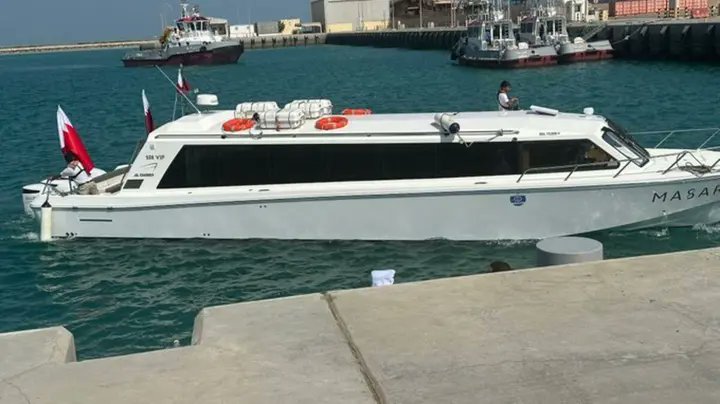
Officials described the new route as a “paradigm shift” in GCC maritime transportation, reflecting the shared commitment of Qatar and Bahrain to greater regional integration and smoother cross-border movement — in line with the Gulf Cooperation Council’s vision for a unified, safe, and sustainable transport network.
.jpg)


.jpg)
.jpg)
.jpg)

.jpg)


.jpg)
.jpg)
.jpg)
.jpg)

 (1).jpg)
.jpg)

.jpg)
.jpg)
.jpg)
.jpg)


.jpg)

.jpg)


.jpg)
.jpg)
.jpg)


.jpg)
.jpg)
.jpg)
.jpg)